
‘What Season Am I?’ How AI Personal Stylists Are Changing the Way We Shop
Updated: Jan 20

For decades, color analysis was a niche styling practice, a relic of the 1980s built on fabric swatches and subjective consultations. Today, it has re-emerged, but the swatches have been replaced by algorithms.
A new wave of consumers is bypassing traditional styling appointments. Instead, they upload selfies to ChatGPT and ask a simple question: “What season am I?”
Within seconds, the AI evaluates skin contrast, eye color, and undertones. It identifies whether someone is a “Soft Summer” that suits muted pastels or a “Deep Autumn” who wears rich olives and rusts best.
For consumers, it’s a straightforward way to reduce decision fatigue. For merchandisers, it represents a meaningful shift in how customers navigate assortments. They are no longer searching for “a red sweater.” They’re looking for specific, data-defined attributes. If your assortment doesn’t reflect that nuance, the sale disappears.
The Rise of the AI Personal Stylist
The barrier to personal styling has collapsed. What once required a trained eye now requires three steps from a smartphone with an AI App:
The Input: A user uploads a photo in natural light and asks ChatGPT to analyze their features through contrast (high vs. low) and temperature (warm vs. cool).
The Analysis: The AI breaks down the data. It might note that bluish veins suggest cool undertones or that strong contrast between hair and skin indicates a Winter palette.
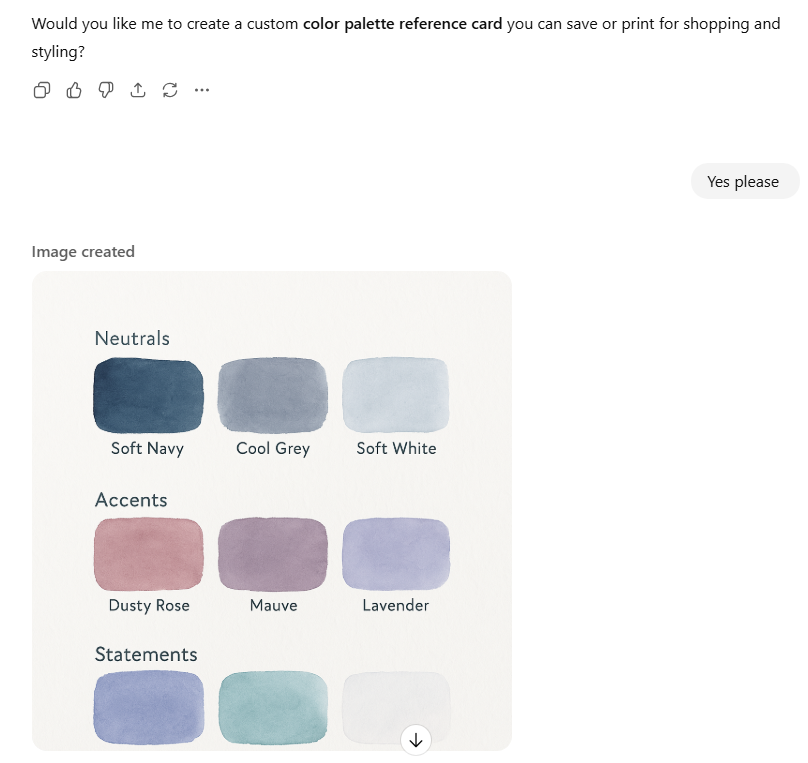
The Prescription: The user receives a defined palette, along with guidance on which tones or metals to avoid.

The result is a highly informed consumer. When this shopper lands on your site, they’re not browsing broadly—they’re filtering for precision.
The Merchandising Gap
This trend exposes a gap in how many brands plan their inventory.
Traditional merchandising often groups products into broad families. A buy plan might allocate “20% Red” or “15% Green.” But for a customer who knows they’re a Spring, there’s a world of difference between a warm coral they’ll buy and a cool, blue-based cherry red they’ll return.
If your data only tells you that “Green is trending,” you’re working without context. Are Springs driving demand for mint? Are Autumns sustaining sales of olive?
Without attribute-level visibility, brands risk investing in the wrong shade of the right idea. This leads to high traffic but lower conversion.
Matching Precision with Precision
To serve a shopper who buys with algorithmic precision, brands must plan with the same level of detail.
This is where AI-driven merchandising becomes essential. Platforms like Prévoir allow merchandising teams to view their assortment not just by SKU, but by the visual attributes that drive performance.

Analyze tone, not just color: Track “Cool Blue” vs. “Warm Blue” by analyzing color family and shade, so can toggle between high-level analysis, or get hyper specific.
Map attributes to sales: Use computer vision to identify whether high-contrast prints are outperforming low-contrast tonal pieces.
Predict niche demand: See whether a spike in Mustard Yellow is a blip or an early signal that Autumn palettes are strengthening.
The Future Is Hyper-Specific
The “What Season Am I?” trend is one example of a larger shift. Shoppers are using data to define their identity, and they expect assortments that match their level of specificity.
The brands that win won’t be the ones with the most inventory—they’ll be the ones with the most intelligent inventory: assortments planned with the same attribute-level detail customers use to shop.
This could also have implications on how retail locations are merchandised (i.e. sections styled by season?) and how sales staff are trained to add additional value to these highly informed customers. If this trend is leveraged properly, it's another great example of AI being a fantastic addition, and not replacement, of human driven roles.


Comments